PaM

Case Study · Property Taxation

End-to-end property tax administration for sub-national governments

From roll capture and mass appraisal through evidenced door-to-door service, multi-channel collection, and audit-ready reporting — PaMGIS gives councils a single, sovereign system to run property and business taxation.

IMAGE
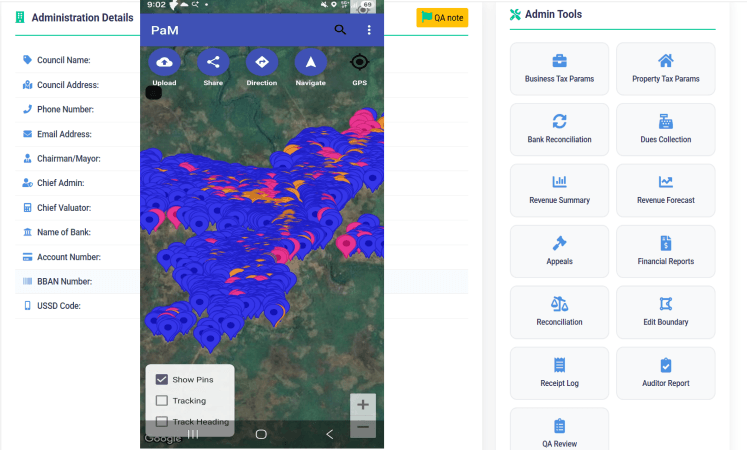
Hero composite — admin dashboard + mobile app
Sample image placeholder
12
Districts on the platform
5
Payment channels (in-app + mobile)
4
RDN service methods with evidence
8
RBAC roles with fine-grained permissions

The Challenge

Councils run on revenue they can't fully see, reliably serve, or cleanly audit

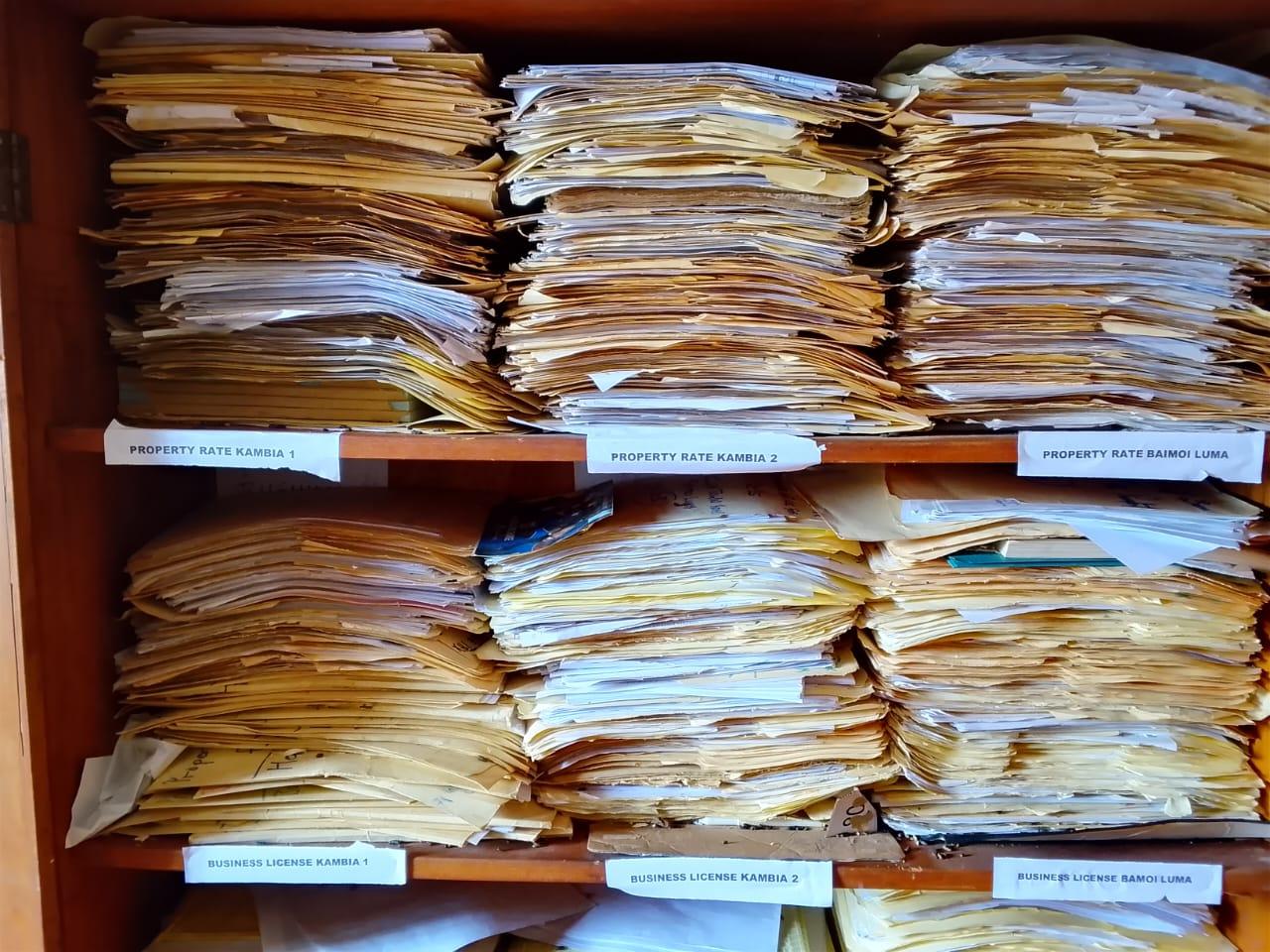
Sub-national governments depend on property, business, and market revenue to fund schools, roads, and clinics — but the systems that track it are fragmented. Rolls live in spreadsheets. Notices leave the office as paper and disappear. Cash moves through pockets before it reaches a bank. Auditors arrive to a ledger no one can defend.

The impact is measurable: coverage rates below 50% are common, disputes stall because nobody can prove a notice was served, and revenue that was collected gets discounted for lack of an audit trail.

IMAGE
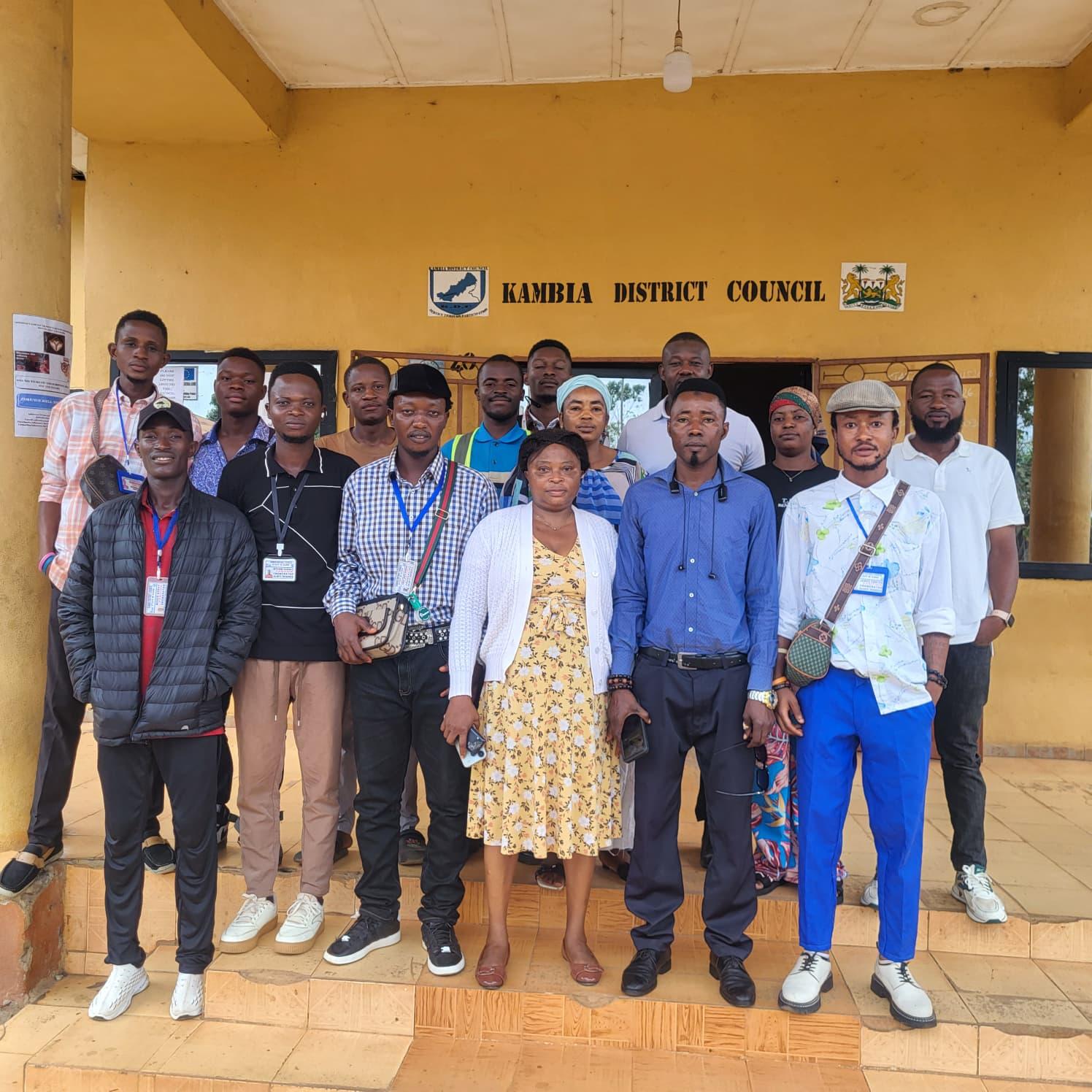
On-the-ground context photo
Sample image placeholder

The Solution

One platform. Roll to receipt to reconciliation.

PaMGIS is built specifically for the property-taxation lifecycle in a devolved revenue system. Each council operates on its own data (multi-tenant by district), under its own branding, with role-based access matched to real council org charts.

  • Web portal — the operational surface for office-based staff, finance, and audit.
  • Companion mobile app — the field-officer tool for door-to-door assessment, service, and collection.
  • Sovereign hosting — data stays on infrastructure the council controls; no exports to third-party CRMs.
  • Standards alignment — reports match ISA, IFRS 15, GASB 33/34, IAAO, and the Sierra Leone Local Government Act 2022.
IMAGE
Admin Dashboard — annotated screenshot
Sample image placeholder

The Workflow

Seven stages, one audit trail

Every stage of the property-tax lifecycle is instrumented. A property's journey from initial survey through year-end close is queryable in a single audit log.

  1. 1

    Roll

    Register properties

  2. 2

    Assess

    Mass appraisal model

  3. 3

    Bill

    Rate Demand Notices

  4. 4

    Serve

    Evidenced delivery

  5. 5

    Collect

    Multi-channel payment

  6. 6

    Reconcile

    Bank + Monime match

  7. 7

    Report

    Audit-ready output

Capabilities

Nine features that change the operating model

These map to specific pain points a Chief Administrator, a Finance Manager, an Auditor, and a Field Officer name in the first five minutes of any deployment conversation.

01

Multi-tenant, multi-district

Countries → Districts → per-district datasets. Councils are isolated from each other; roles and reports scope automatically to the user’s council.

02

Mass appraisal model

IAAO-aligned linear-regression valuation with per-district coefficient tuning. Model quality tracked via R², RMSE, MAE, MAPE.

03

Evidenced RDN service

Every served Rate Demand Notice captures recipient name, relationship, signature, GPS coordinates, and the exact disclaimer version shown — never edited, only added to.

04

Five payment channels

Monime USSD, Monime Payment Code, bank deposit with slip verification, field officer via the mobile app, and cash-to-bank-deposit. Each with its own audit trail.

05

Bank reconciliation with slip proof

Taxpayers upload the deposit slip photo; Finance Officers verify against system totals before the payment reflects on the property. Rejections require a stated, visible reason.

06

Passive Quality Assurance

A dedicated QA role that can raise flags on any record but cannot resolve them — segregation of duties enforced at the API layer. Every finding is traceable end-to-end.

07

Appeals workflow

Four-state lifecycle (Filed → Under Review → Decided → Resolved), with reviewer assignment, decision reasoning, and adjusted-value effects on the property record — all logged.

08

Auditor Report — print-ready

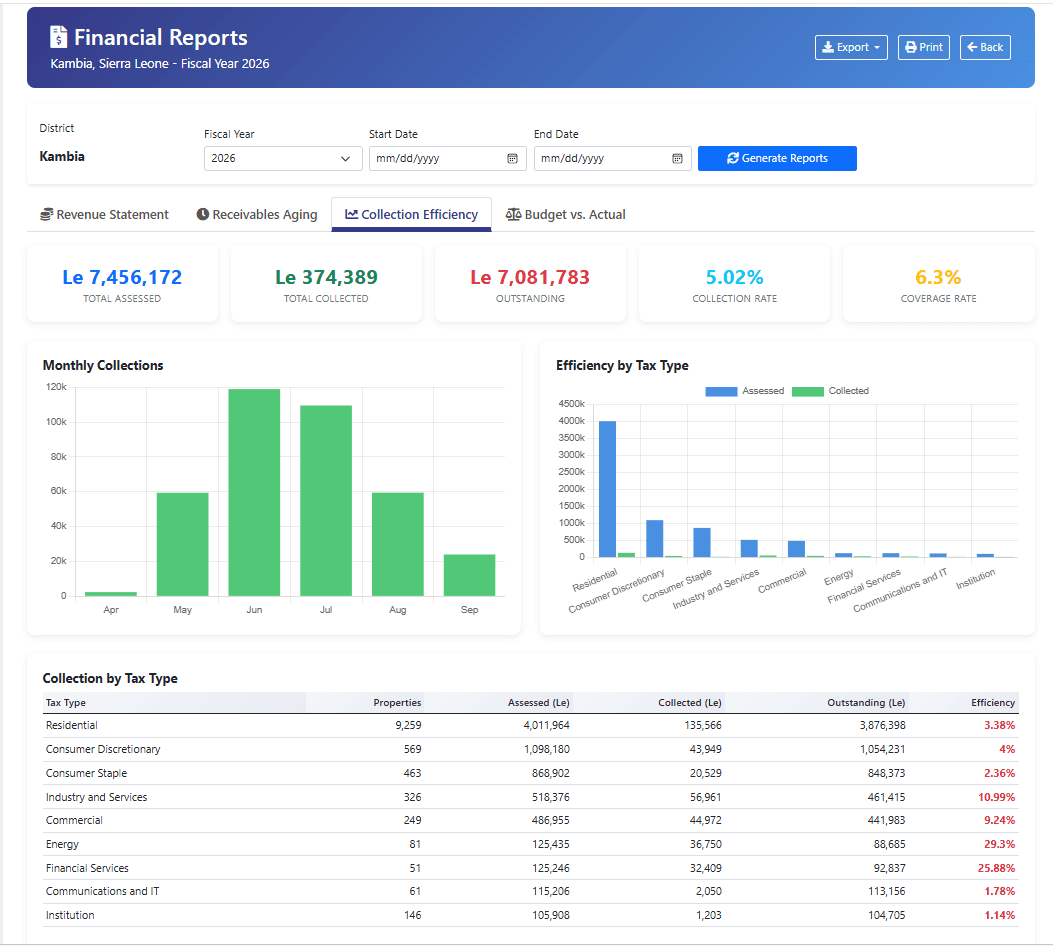
Executive summary, coverage, revenue by channel, aging, appeals, reconciliation ledger, and audit-trail extract — signed off in one PDF handed to the auditor at their first visit.

09

Comprehensive audit log

Every mutation to every record — property, appeal, payment, reconciliation, user, RDN service — with full old/new-values JSON diff. Filterable, exportable, IP-tagged.

Deep Dive · Rate Demand Notice

From “we sent it” to “we can prove it”

Serving an RDN used to end with a checkbox: served, yes or no. That's not enough when a taxpayer disputes delivery or an auditor asks for evidence. PaMGIS captures the entire moment of service — and never lets it be edited.

  • Four outcomes — In Person (signed), Refused to Sign, Left at Premises, Affixed.
  • Recipient captured — name and relationship (Owner, Tenant, Family, Caretaker, Agent, Employee, Neighbour, Other).
  • Signature on device — draw on the tablet or upload a photo of a paper signature.
  • GPS at the door — latitude, longitude, and accuracy recorded alongside the service.
  • Versioned disclaimer — the exact text the recipient saw is looked up by version; wording changes never rewrite history.
  • Append-only — corrections add a superseding record; original attempts stay on file forever.
IMAGE
RDN Service Evidence — popover / mobile screen
Sample image placeholder

Deep Dive · Field Operations

Two field tools, one revenue picture

Property and business tax field collection runs on the companion PaM mobile app. Market fees, checkpoint fees, and council dues run through the web Collection Dashboard. Both feed into the same audit trail and reports.

VIDEO
Mobile app — field officer walk-through
Sample video placeholder

The PaM mobile app

Field officers work off a tablet or phone. Offline-first: submissions queue when there's no signal and sync automatically when connectivity returns — no lost transactions.

  • On-device receipt — printed or shared as PDF, given to the payer immediately.
  • GPS + signature capture — for RDN service or on-the-spot payments.
  • Same audit trail — everything the field officer does is logged and visible to Finance and Audit.

The web Collection Dashboard

Counter-based dues collection for markets, checkpoints, and council fees. Same offline-first pattern; three categories with typed fee lists that a council administers per-district.

  • Categories — Market Dues (daily / weekly / monthly), Checkpoint Fees, Council Dues.
  • Per-collector accountability — every payment tagged to the collector; leaders can drill into any officer's performance.
  • Reconciliation-friendly — cash collected during the shift settles against verified deposits at day's end.
VIDEO
Web Collection Dashboard walk-through
Sample video placeholder

Deep Dive · Reporting & Compliance

The Auditor Report is print-ready — because auditors don't have time to hunt

One page: executive summary, survey coverage, revenue by channel, aging analysis, appeals decisions, Monime reconciliation ledger, and the last hundred audit events — with signature blocks for the Chief Administrator and the external auditor.

  • Aligned to standards — ISA 315, ISA 500, IFRS 15, GASB 33 & 34, GASBI 5, and IAAO mass-appraisal/ratio-study standards.
  • Local statute — structured to satisfy Sierra Leone's Local Government Act 2022 §§ 79–82.
  • Every report exports — Excel, CSV, PDF; hand any of them straight to an external auditor.
  • Segregation of duties — QA raises findings; Finance closes them.
IMAGE
Auditor Report — first page (PDF)
Sample image placeholder

“Placeholder for a real testimonial from a council leader, Head of Revenue, or external auditor — two or three sentences naming a specific outcome (coverage-rate improvement, revenue growth, audit-turnaround time cut).”

Name · Title · Council or Ministry

Deployment

Deployed across Sierra Leone; architected for expansion

The platform is live across twelve districts in Sierra Leone today, with a multi-tenant architecture that lets a new district — or a new country — be provisioned as its own isolated dataset without touching any existing council's data.

Technical foundation

  • Sovereign hosting — runs on infrastructure the council or country controls.
  • Session security — Argon2id password hashing, rate-limited login, CSRF-protected endpoints.
  • Encrypted storage — signatures, deposit slips, and receipts in encrypted object storage served through a proxy.
  • Extensible — adding a district, language, payment channel, or report is a bounded task, not a rewrite.
IMAGE
Deployment map — Sierra Leone districts
Sample image placeholder

Ready to see it in your council's data?

Book a 45-minute demo. We'll walk one of your properties end-to-end.